BPC-157 Capsules 1000mcg: What to Know
What a 1000mcg BPC-157 capsule label means, how it compares to 500mcg options and what to check before buying higher-dose products.
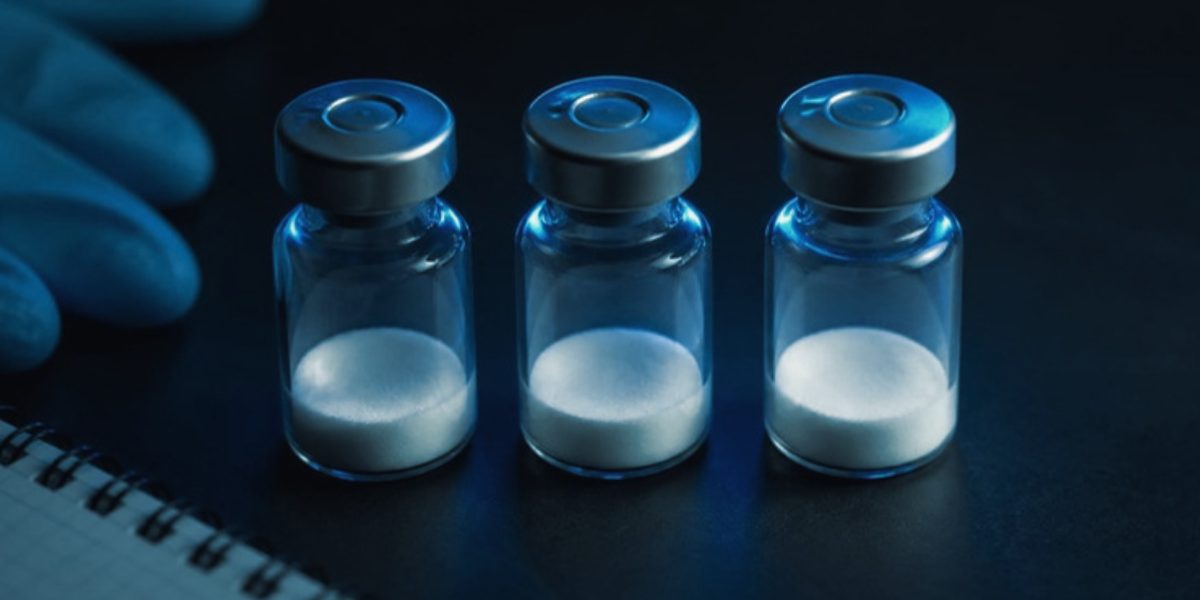
Some suppliers offer BPC-157 capsules 1000mcg per unit. This figure is remarkable because it is twice the dose (500 mcg) used in popular products such as the Real Peptides BPC-157 Capsules. But what does 1000 mcg mean exactly? Is it double the dosage of the peptide, a different type of salt, or just a misleading label? In the following text, we elaborate on this terminology and review how salt types guarantee the dosage ingredient and its importance in comparing products.
What 1000 mcg on a Label Actually Means
1000 mcg equals 1 mg. That is simple unit conversion. The question is whether 1000 mcg on a capsule label represents 1 mg of pure BPC-157 peptide or 1 mg of a peptide salt complex that includes non-peptide mass.
Salt Form Matters
The form may be free base of BPC-157, acetate or arginate salt form. Counterion is added to produce acetate and arginate form but does not change the peptide structure of the compound. A capsule labeled “1000mcg BPC-157 arginate” may contain less active 15-amino-acid peptide than a "500mcg BPC-157 acetate" capsule. If the form of the salt is not specified and a certificate of analysis does not show the exact peptide content, the number on the product may not be indicative of the actual amount of the peptide.
Real Peptides lists their capsules at 500 mcg with HPLC purity confirmed at 99% or above. That 500 mcg figure represents verified peptide content. A product labeled at 1000 mcg without a COA could contain less actual BPC-157 than the 500 mcg capsule from a vendor that publishes testing data. Numbers on labels without documentation behind them are marketing decisions, not analytical facts.
Pentadeca Arginate and the 1000 mcg Question
In high doses, certain products marketed as BPC-157 may actually be pentadeca arginate, a substance combining the BPC-157 peptide sequence and L-arginine. Due to the presence of arginine, pentadeca arginate has a higher molecular weight compared to BPC-157 alone. So a single capsule with 1000 mcg of pentadeca arginate does not contain 1000 mcg of BPC-157 peptide. For more about these two substances, please check our pentadeca arginate vs BPC-157 article.
How 1000 mcg Compares to 500 mcg
When both capsules include the exact salt type and both are verified to be pure, the 1000 mcg capsule has twice the peptide amount. It is a simple fact. The complications start when the products use different salt types, differing purity levels, or have different labeling systems. Here’s a checklist:
- Salt form: Is the label specifying free base, acetate, or arginate?
- COA: Does the vendor publish a Certificate of Analysis with HPLC-verified peptide content?
- Purity percentage: 99% purity on 500 mcg means 495 mcg of actual peptide. 90% purity on 1000 mcg means 900 mcg. The purity gap narrows the effective dose difference.
- Price per verified milligram: This is the only metric that allows fair comparison across vendors and dose sizes.
| Label Claim | If Free Base (99% pure) | If Arginate Salt (est. ~70% peptide fraction) |
|---|---|---|
| 500 mcg | ~495 mcg active peptide | ~350 mcg active peptide |
| 1000 mcg | ~990 mcg active peptide | ~700 mcg active peptide |
Why Documentation Beats Dose Numbers
A capsule containing 1000 mcg is merely a figure noted on the label as per the vendor’s specifications and does not have any certificate of analysis (COA). A 500 mcg capsule containing verified COA via HPLC is a known quantity. The Real Peptides BPC-157 Capsules delivery contains 500 mcg capsules for which a documented purity of greater than or equal to 99% has been verified by performing tests on the lot.
Vendors who promote their products as “1000 mcg” without proper scientific backing could be either using a salt form of higher weight or a product of lower purity. Without any information on the certificate of analysis, it is impossible to ascertain the implications of either case.
Should You Choose 500 mcg or 1000 mcg?
Select the product that has the optimal documentation and not the most quantity. A certified capsule of 500 mcg from a company that publishes HPLC data reduces the uncertainty much more than an uncertified capsule of 1000 mcg. Should the 1000 mcg product provide a COA (Certificate of Analysis) that confirms the peptide content of the free-base form, it can be considered to actually possess a greater dosage. But without such documentation, no comparison between the two products can be established.
All research involving animals measured doses in micrograms per kilogram of weight. No dosing regimen or protocol for humans has been established for BPC-157 at this time. Also, there’s no clinical evidence to indicate that it is safe to double the dose recommended in capsules because no such studies exist. Our oral BPC-157 benefits article covers what was discovered in animal studies involving the oral use of the medication.
FAQ
Is a 1000 mcg BPC-157 capsule twice as strong as 500 mcg?
If, and only if, both capsules contain identical salt form at identical purity. The 1000 mcg product is using arginate salt form while the 500 mcg product is using free base. In this case, the difference in the actual peptide content will be smaller than what the label says.
What salt form should I look for?
The most popular form in published studies is the acetate salt. The arginate forms refer to the combination of the peptide with the L-arginine and have a slightly heavier molecular weight than the pure peptide. In free base form, there is no counter-ion present. The label must specify the form for the mcg claim to be precise, otherwise, the mg content stays uncertain.
Does a higher dose mean better results?
Whether BPC-157 capsules 1000mcg produce better results is unknown, as the dose-response relationship of oral BPC-157 has not been determined by any human research. Various dosages were established for animals according to body mass. There is no proof that 1000 mcg of the substance yields more positive results than 500 mcg, given the absence of clinical studies on humans. So the issue of the dose is still up for discussion.
Keep reading
Oral BPC-157 Benefits: What Studies Report
Benefits reported in published studies using oral BPC-157 in animals. Gastric protection, colitis reduction, and observed systemic effects.
Pentadeca Arginate vs BPC-157: Same Peptide?
Is pentadeca arginate the same as BPC-157? The chemical relationship, regulatory background and why the name appears on certain supplement labels.
BPC-157 + TB-500 Capsules: Blend Options
Are BPC-157 and TB-500 available together in capsule form? Current product options, blend ratios and what the research says about combining them orally.
Compare the current picks
Prices, sizes and ratings side by side, updated when the merchant pages change.
See capsule picks